nustargame Probability in Casino Games
Unlocking Wins: Understanding nustargame Probability in Casino Games
Welcome to the thrilling world of online casinos, where excitement and strategy intertwine! If you're new to this landscape, understanding the underlying mechanics of casino games is crucial for a more enjoyable and potentially rewarding experience. This guide, brought to you by nustargame, will demystify the concept of probability in casino games, helping you make more informed decisions as you play. We'll explore how probability influences your chances of winning, debunk common misconceptions, and provide practical tips for navigating the diverse range of games available on our mobile-first platform in the Philippines. From classic table games to exciting slots, knowing the odds is your first step towards becoming a savvy player. Get ready to enhance your gameplay and discover the secrets behind every spin, deal, and roll with nustargame!
Table of Contents
- What is Probability in Casino Games?
- House Edge and Return to Player (RTP) Explained
- Probability in Popular nustargame Casino Games
- Common Misconceptions About Probability
- Strategies to Improve Your Odds (Within Probabilistic Limits)
- Responsible Gaming and Probability
What is Probability in Casino Games?
Probability is the mathematical measure of the likelihood of an event occurring. In the context of casino games, it quantifies the chances of a specific outcome, such as hitting a certain number in roulette, getting a blackjack, or landing a winning combination on a slot machine. Understanding probability is fundamental because it reveals the inherent fairness (or unfairness, from a player's perspective) of any given game. Every casino game, whether it's a card game, a dice game, or a spinning reel, operates on a set of mathematical probabilities that determine the frequency of wins and losses.
For instance, in a simple coin toss, the probability of landing heads is 1/2, or 50%, because there are two equally likely outcomes. Casino games are more complex, involving multiple variables and outcomes. However, the core principle remains the same: the higher the probability of an event, the more likely it is to occur. Conversely, low probability events, while less frequent, often come with higher payouts, which is what makes them so enticing. Recognizing these probabilities helps players manage their expectations and make more informed betting decisions, rather than relying solely on luck.
It's important to differentiate between theoretical probability and observed probability. Theoretical probability is what mathematics predicts over an infinite number of trials. Observed probability is what actually happens over a limited number of trials. While your short-term experience might deviate from theoretical probability, in the long run, the results will tend to align with the mathematical odds. This understanding is key to appreciating why the casino, over time, always has an advantage.
House Edge and Return to Player (RTP) Explained
Two critical concepts directly related to probability in casino games are House Edge and Return to Player (RTP). These terms quantify the casino's built-in advantage and the expected payout to players over time.
House Edge
The House Edge is the casino's average profit from a player's bet, expressed as a percentage. It represents the advantage the casino has over the player in any given game. For example, if a game has a 2% house edge, it means that, on average, for every ₱100 wagered, the casino expects to keep ₱2 over the long run. This edge is what allows casinos to operate profitably. It's not about individual wins or losses, but the statistical advantage that ensures the casino makes money over millions of bets. Games like European Roulette typically have a house edge of 2.7%, while American Roulette, with its extra double-zero slot, has a higher house edge of 5.26%. Understanding the house edge helps you choose games where the casino's advantage is smaller, potentially offering you better long-term value.
Return to Player (RTP)
Return to Player (RTP) is the inverse of the house edge, often used for slot machines and other fixed-odds games. It's the percentage of all wagered money that a slot machine or casino game is programmed to pay back to players over time. For instance, a slot machine with an RTP of 96% means that, on average, for every ₱100 wagered, the machine is expected to pay back ₱96 to players, keeping ₱4 as the house edge. Higher RTP percentages are generally more favorable for players, as they indicate a smaller house edge and a greater potential return over extended play. At nustargame, we transparently provide RTP information for many of our games, allowing players in the Philippines to make informed choices. Always look for games with a higher RTP if you're aiming for better long-term prospects.
Probability in Popular nustargame Casino Games
Let's dive into how probability manifests in some of the most popular casino games available on nustargame, tailored for our players in the Philippines.
Slots
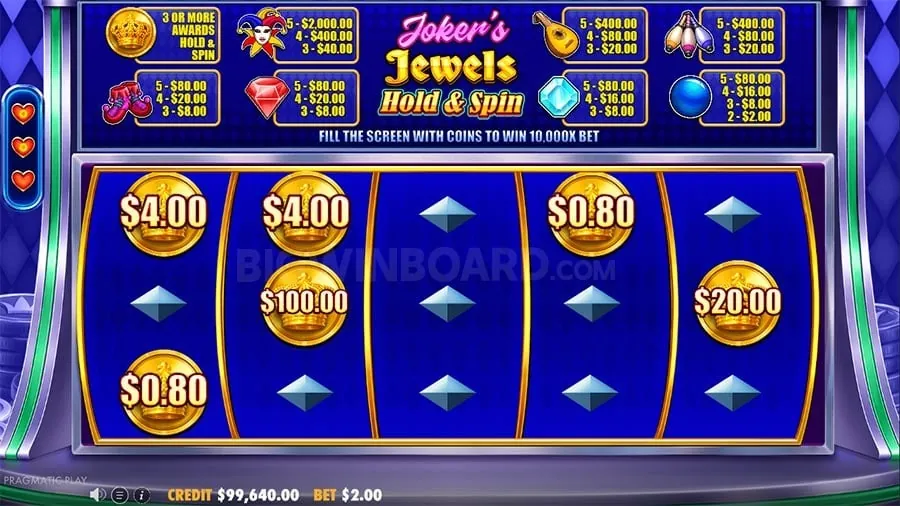
Slot machines are perhaps the most popular casino games, known for their vibrant themes and straightforward gameplay. However, their probabilities are often misunderstood. Each spin is an independent event, meaning the outcome of previous spins does not influence future ones. The probability of hitting a winning combination is determined by the game's Random Number Generator (RNG), which ensures fairness and unpredictability. The key probability metric for slots is the Return to Player (RTP) percentage, which, as discussed, indicates the average percentage of wagered money returned to players over time. For example, a slot with 96% RTP means that for every ₱100 wagered, ₱96 is expected to be returned to players over millions of spins. Volatility (or variance) is another important aspect: high volatility slots pay out less frequently but with larger wins, while low volatility slots pay out more often but with smaller amounts. nustargame offers a wide array of slots, each with its unique RTP and volatility.
Roulette
Roulette is a classic game of chance where players bet on where a ball will land on a spinning wheel. There are two main versions: European Roulette (single zero) and American Roulette (double zero). The probabilities are relatively easy to calculate. For European Roulette, there are 37 pockets (1-36 plus a single 0). The probability of hitting a specific number is 1/37. For red/black or odd/even bets, the probability is roughly 18/37 (or slightly less than 50% due to the green zero pocket). American Roulette has 38 pockets (1-36 plus 0 and 00), making the probability of hitting a single number 1/38 and the odds for red/black slightly lower at 18/38. The house edge in European Roulette is 2.7%, while in American Roulette, it's 5.26%, making European Roulette generally more favorable.
Blackjack
Blackjack is unique because player skill and strategy can influence the outcome, making it one of the casino games with the lowest house edge if played optimally. The game's probability revolves around the composition of the deck and the dealer's up-card. For example, the probability of getting a blackjack (an Ace and a 10-value card) on the initial deal is approximately 4.8% from a single deck. Understanding basic strategy, which dictates when to hit, stand, double down, or split based on your hand and the dealer's up-card, can significantly reduce the house edge to as low as 0.5% or even lower. This strategy is based on mathematical probabilities, making it an essential tool for serious blackjack players on nustargame.
Baccarat
Baccarat is a game of pure chance with a very low house edge, especially on the Banker bet. Players bet on either the 'Player' hand, the 'Banker' hand, or a 'Tie'. The probabilities are fixed: the Banker hand wins slightly more often than the Player hand due to specific drawing rules. The Banker bet has a house edge of about 1.06%, the Player bet has a house edge of about 1.24%, and the Tie bet, while offering a much higher payout (typically 8:1 or 9:1), has a significantly higher house edge, often around 14.36%. For this reason, betting on the Banker is statistically the best option in baccarat, even with the commission typically charged on Banker wins. nustargame offers various baccarat tables for players to experience this elegant game.
Common Misconceptions About Probability
Navigating the world of casino games requires not only understanding probability but also dispelling common myths that can lead to poor decisions. Here are a few prevalent misconceptions:
The Gambler's Fallacy